
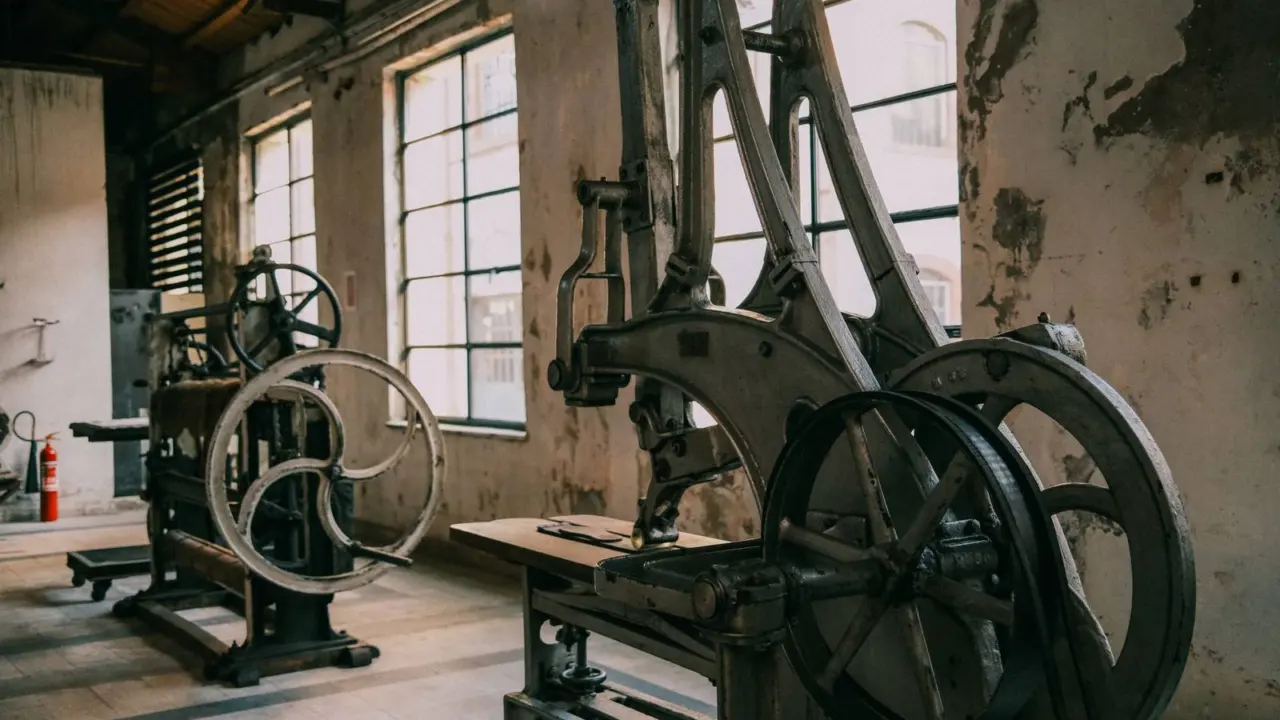
Wondering how everyday objects came to be mass-produced and designed? The history of industrial design starts when factories, not only craftspeople, began shaping them. You can follow it from the 1851 Crystal Palace to the Bauhaus.
For the definition and scope of the field, read what is industrial design, then use this page as the timeline that goes with it.
| Milestone | Key fact |
|---|---|
| Crystal Palace, London | Built in eight months for the 1851 world fair |
| Thonet Bistrot chair | 50 million sold between 1859 and 1930 |
| Ford Model T | 15 million built from 1909 to 1926 |
| De Stijl founded | 1917 |
| Bauhaus turns to industrial production | 1925 |
| Bauhaus closed by the Nazis | 1933 |
These figures come from the Eduscol short history of design. Dates and counts can change as historians revise them, so check the source before you rely on them.
From craft to factory: the Crystal Palace and Thonet
The design story is tied to the industrial revolution. With mechanised production, the human environment began to be shaped by industrialists and not only by craftspeople and artists, as the Eduscol short history of design puts it.
The Crystal Palace is the best-known early symbol. Joseph Paxton designed it for the London world fair of 1851, and it went up in eight months from standardised modular units prefabricated in a factory, according to Eduscol.
Not everyone cheered. The critic and art historian John Ruskin opposed the building sharply, and the Arts and Crafts movement, with William Morris among its leading figures, carried the objection forward.
That argument is the debate between technology and industry on one side and the beauty of the unique handmade object on the other. Eduscol notes that it continues to this day.
Michael Thonet, an Austrian, showed that series production could combine quantity with formal quality. His bentwood furniture was built from components that were easy to assemble with screws, and Eduscol counts 50 million Bistrot chairs sold between 1859 and 1930.
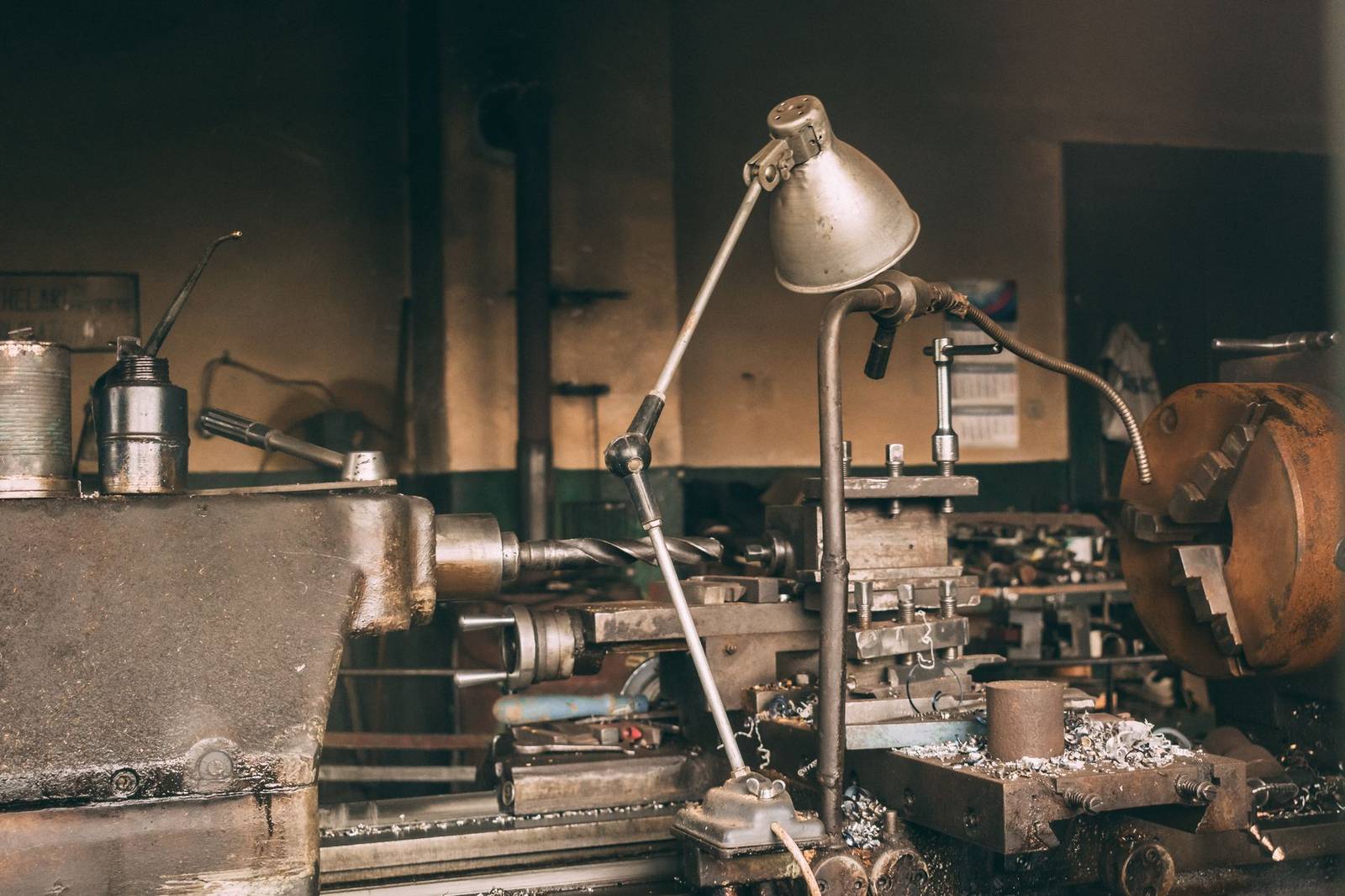
Thonet’s simple, repeatable parts anticipate a concern that every product team still shares. If you want the practical side of that idea, design for manufacturing explains how a form is shaped around how it will be made.
Mass production in the history of industrial design
In the United States, mechanisation met few historical constraints, since the country was described as free of historical references. The Eduscol timeline dates the Model T entry to 1908, when Ford had the idea of mechanising its making.
The equipment that inspired the plan came from the Chicago slaughterhouses. According to Eduscol, 15 million Model Ts were built from 1909 to 1926.
Ford drew on the scientific work organisation developed by Taylor to set up the assembly line. Eduscol describes the Model T as an economical car, so the way it was built mattered as much as its shape.
This is a useful lesson for the whole field. The shape of an object and the system that produces it cannot be separated for long, and later designers had to work within that reality.
Peter Behrens and the first “global design”
In Germany, the collaboration between the architect Peter Behrens and the electrical company AEG produced what Eduscol calls the first major example of global design. The Eduscol timeline dates the AEG logotype work to 1910.
Behrens did not stop at the product. According to the same source, he:
- worked on the design of the products themselves;
- redrew the company logotype and designed letterheads;
- created advertising posters and packaging;
- imagined the new buildings of AEG’s Berlin factory and the housing for its workers.
Product, brand and building treated as one joined-up job is the idea behind today’s corporate identity. The company is named here only as a historical example.
Bauhaus, De Stijl and the modern movement between the wars
The Dutch movement De Stijl was founded in 1917 by Theo van Doesburg, with Gerrit Rietveld as one of its leading personalities, according to Eduscol. Linked to the painter Mondrian, it admitted only vertical and horizontal lines and strictly primary colours.
The Bauhaus was founded by Walter Gropius, who wanted to train creators able to design everything in the made environment apart from buildings. In its early years it was not oriented towards series production for obvious economic reasons, and only in 1925 could it turn to industry, notably with the tubular furniture of Marcel Breuer, per Eduscol.
The Nazis closed the school in 1933. Its teaching rested on a foundation course developed and taught by artists from the avant-garde currents.
Elsewhere, similar ideas took local forms:
- In France, designers who believed modernity and wide distribution depended on the rational use of industry’s materials and means grouped together in 1929 as the Union des artistes modernes.
- Within that circle, Jean Prouvé went furthest by imagining a metal house that could be made the way a car is made.
- In Finland, Alvar Aalto reconciled craft know-how with rational functionalism.
All three points are from Eduscol. Together they show a field trying to reconcile technology with human needs.
Streamlining, mid-century and later movements
The Wikipedia list of industrial designers groups names by movement. Under Streamline Moderne it places Norman Bel Geddes, Henry Dreyfuss and Raymond Loewy.
The same list files Charles and Ray Eames, George Nelson and Eliot Noyes under Mid century modern (1945-1959). It groups Arne Jacobsen, Verner Panton and Tapio Wirkkala under Scandinavian design.
Under Italian design (1960-1970s), the list names Achille Castiglioni, Joe Colombo and Gae Aulenti. Later entries include the Memphis Group (1980-1987) and Droog Design, founded in 1993.
Treat these labels as a map, not a ruling. As the list itself says, many designers followed several trends and are placed under the movement they are most associated with.
Why does this history still matter?
Each phase answered the same question: how do you make good objects at scale? Ruskin and Morris pushed back on industry, Thonet and Ford embraced it, Behrens widened the brief to a whole company, and the Bauhaus turned the problem into a teachable method.
That method is still visible in daily practice. To see how those lessons play out step by step, read about the industrial design process.
A good habit is to read any period piece as a response to its tools. Bentwood, tubular steel and the assembly line each opened some doors and closed others.
Frequently asked questions
When did industrial design begin?
Show answer
There is no single date. Eduscol links the history of design to the industrial revolution, and the Crystal Palace of 1851 is an early, well-documented example of factory-made standardised parts.
Who created the first example of global design?
Show answer
Eduscol describes the work of Peter Behrens for AEG as the first major example of global design. He handled products, logos, stationery, posters, packaging and buildings.
What did the Bauhaus change?
Show answer
Founded by Walter Gropius, it trained creators to design the whole made environment. It turned to industrial production in 1925, according to Eduscol, and was closed in 1933.
Why is the Ford Model T part of design history?
Show answer
Ford mechanised its production and used Taylor’s scientific work organisation to build an assembly line. Eduscol reports 15 million cars built from 1909 to 1926.